News Story
I’m writing this as I sit on the train back to Manchester from Edinburgh. I’ve just spent the last few days at the Fringe, scouting a few potential shows that might fit into our annual celebration of Queer culture: Queer Contact, as well as anything else that could be a good fit for Contact's programme throughout the year.
This is the first time I’ve been to the Fringe in this capacity and let me tell you, I was so apprehensive. Not that I wouldn’t see shows or that something terrible would happen, but just that it’s another step forward for me and also a step forward for Contact that we’re in a position to be able to scout shows.
Across three days I saw eight shows, collected countless flyers for productions I wish I’d had time to see, reconnected with artists from different moments in my career, squeezed in an impromptu mentoring conversation, caught up with colleagues old and new, shared drinks with a trustee, had lunch with my best friend, got drenched in the rain and basked in the sun. All in all I would say that it was a pretty successful trip.
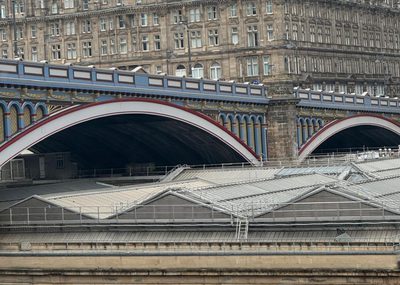
The Fringe can be an amazing place. I’ve seen some great work and shows that I’m still thinking about days later. But there is another story too. Artists having to scrimp and save to get their work seen here. Often performing, as was the case in one show I saw, to an audience of just three people.
If I had to pick my top three shows, and I like lists in threes, they would be:
- HAM by Hotter Project, Speakerphone Productions and Soho Theatre at Summerhall
- Trans People Are Awful - A Beth Sitek, Ros Watt and CPT Co-Production at Pleasance Courtyard
- CAMPITALISM: Three Gays Try to Fix The Economy by Boy Theatre, Leicester Curve and Pleasance at Pleasance Courtyard
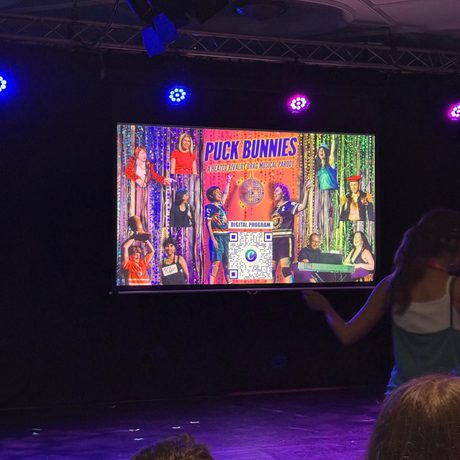
All three shows were high energy, camp in moments, dealt with some tough subject matter and had some real moments of joy. Also an honourable mention to the Puck Bunnies: A Heated Rivalry Drag Musical Parody and the delightful Zamboner (Queer version of a Zamboni (Machine that does something to the ice on ice rinks))
Image gallery
Edinburgh Fringe 2026

A theme came up in a number of the conversations I had with people, across artists, producers and even within shows. Money. Or, the cost of bringing and participating in the Fringe. Or, the economy being geared towards the privileged few. Or, how do we, collectively, fix the sector, the country, or even the world?
It’s something that I think about a lot in the work we do at Contact. We talk about access, we talk about who is in the room, we talk about whose stories get to be told and by whom.
After this trip and these conversations about the issues that are deep-rooted within our sector, it feels particularly important that tomorrow, I’ll be watching a show, created by our Contact Young Company young people and built around a different set of values. Not perfect, no, but focussed on access and care. It’s in these moments that I’m reminded again that this is where change begins.
Author: Contact CEO, Jack Dale-Dowd

You might also like …
A Note From Our Artistic Director
27 April 2023Read more about Contact's NPO outcome and our plans for the next three years.
A New CEO for Contact
31 January 2025Today we announce the appointment of Jack Dale-Dowd as the new Chief Executive Officer (CEO) of Contact, following a thorough recruitment process in Autumn 2024. Jack, who has been an integral part of the Contact family for over 10 years,…
Queer Contact Returns for 2023
26 April 2023Queer Contact is back, baby! We can’t wait to celebrate queer culture with a lineup of the UK’s most extraordinary LGBTQ+ talent. Learn all about our flagship queer arts festival below, and secure your tickets today!